
What Makes a Power Genset Essential for Reliable Energy Supply?
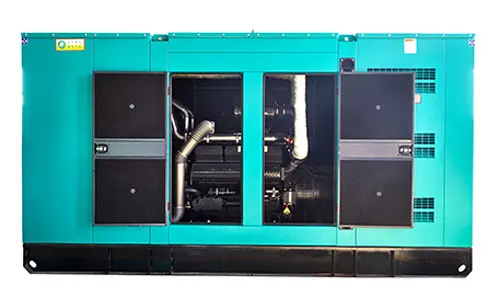
The global generator market maintains a 5.8% CAGR, reaching an estimated $34.5 billion by 2028 due to grid instability affecting 70% of industrial hubs. A power genset prevents losses that average $9,000 per minute in Tier 3 data centers by stabilizing voltage within +/- 0.25% during outages. These units satisfy ISO 8528-5 G3 standards for transient response, providing 100% load pickup in under 10 seconds to protect healthcare and manufacturing sectors.
Utility infrastructure in many regions is over 40 years old, leading to a 20% increase in unplanned outages since 2020. This aging hardware fails to manage the surge in demand from electric vehicle charging and heat pump adoption across residential sectors.
"A single voltage dip below 90% of nominal levels for more than 50 milliseconds can trigger automated shutdowns in robotic assembly lines, costing plants roughly $50,000 per incident."
The necessity of a power genset becomes evident when the ATS (Automatic Transfer Switch) initiates a start command the moment utility frequency deviates by more than 2.5 Hz.
This immediate transition relies on heavy-duty diesel engines that utilize High-Pressure Common Rail (HPCR) fuel systems to ensure complete combustion. In a 2023 study of 500 hospital backup systems, diesel units demonstrated a 99.6% start-reliability rate compared to gas-alternatives during extreme cold.
-
Transient Recovery: Modern units return to steady-state voltage in less than 1.5 seconds.
-
Thermal Efficiency: Open-cycle systems now reach 38-42% fuel-to-electricity conversion.
-
Autonomy: On-site fuel tanks typically provide 24 to 72 hours of full-load operation.
These efficiency gains allow enterprises to manage the Sustained Interruption Average Duration Index (SAIDI), which rose to 5.5 hours per customer in several developed nations last year.
High-density data centers require N+1 or 2N redundancy where multiple generators synchronize using Digital Paralleling Controllers to share a single bus. When three 2,000 kW units operate in parallel, the system manages a total load of 6,000 kW with a 15% safety margin for motor starting inrush currents.
| Parameter | Industrial Diesel Genset | Natural Gas Genset |
| Startup Time | < 10 Seconds | 30-60 Seconds |
| Energy Density | 36,000 kJ/L | 32,200 kJ/m³ |
| Load Acceptance | 100% One-Step | 25-50% Steps |
The ability to accept a 100% block load ensures that life-safety systems, including smoke extraction fans and emergency elevators, function without stalling the prime mover.
Environmental regulations now mandate Tier 4 Final or Stage V compliance, reducing Particulate Matter (PM) by 90% through Selective Catalytic Reduction (SCR) technology. These systems inject Diesel Exhaust Fluid (DEF) at a rate of roughly 3% to 5% of fuel consumption to neutralize Nitrogen Oxides (NOx).
"Compliance with localized noise ordinances often requires Level 2 or Level 3 acoustic enclosures, which reduce sound pressure levels to 75 dB(A) at 7 meters."
Such strict adherence to emission and noise standards enables the installation of units within 50 feet of residential zones or office complexes without violating zoning laws.
In remote mining operations, the main grid is non-existent, making the power genset the primary source of 24/7 baseload energy. These sites often run 8,000 hours per year, necessitating a Mean Time Between Overhaul (MTBO) of at least 20,000 to 30,000 hours.
Heavy-duty alternators equipped with Permanent Magnet Generators (PMG) provide the excitation needed to clear short circuits of up to 300% of the rated current for 10 seconds. This prevents a localized fault from tripping the entire facility's protection relays prematurely.
The integration of bi-fuel kits allows operators to substitute up to 70% of diesel with natural gas, lowering operational costs by 25% depending on local fuel price spreads. Digital monitoring platforms now track over 200 engine parameters in real-time, transmitting data via 4G/5G gateways to predict maintenance needs before a component fails.
Recent field data suggests that predictive maintenance reduces emergency repair costs by 18% and extends the useful life of the alternator windings by approximately 5 years. This longevity ensures that the capital expenditure for a standby system is amortized over a 20-year lifecycle.
Weather patterns in 2025 showed that 45% of outages were caused by wind or ice, conditions where solar panels and wind turbines often underperform or shut down for self-protection. A fuel-powered system remains the only technology capable of providing kilowatt-scale density regardless of cloud cover or wind speed.
By maintaining a stable 50Hz or 60Hz frequency, the genset protects sensitive electronics from harmonic distortion, which is often kept below 5% Total Harmonic Distortion (THD). This precision is what allows global telecommunications networks to maintain 99.99% "four-nines" reliability even when the surrounding geography is entirely disconnected from the national grid.
Specify WallProtect for your next project
Request a free sample kit, Revit families, and ISO/ASTM documentation — delivered within 5 working days for stocked colors.
Request a Free Sample Kit